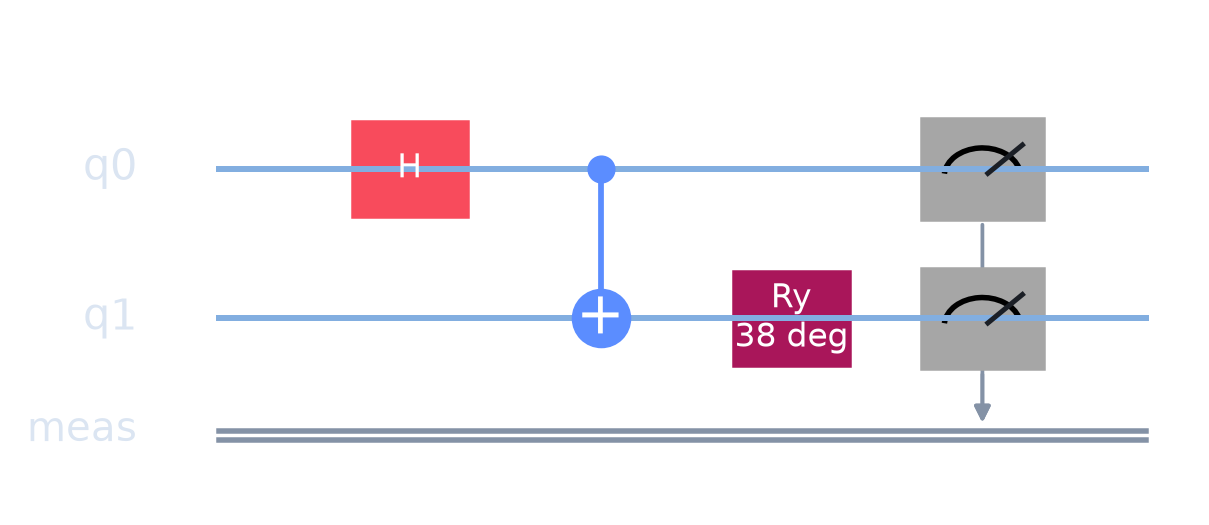
Standard Tetris rules. Piece, spawn state, cadence, bonuses: each stochastic event runs a predefined circuit; measured bits drive the in-game effect.
Architecture. Bevy (Rust) → WASM in the browser. RustQIP (RustQipBackend) simulates the statevector by default locally and online.
The player: ← → ↑ ↓ and Space. The game: everything else.
Publication. Featured in Programmez! special issue (hors-série) n°23 (2026), pp. 7–11 — Link to the magazine article (not open access).
Auditable randomness. Every stochastic draw is logged (hash-chained receipts, layers C5/C6). On game over the journal is printed to the browser console; file export and offline verification are available in the desktop build — see docs/AUDIT.md on GitHub. The conceptual framework behind these layers is developed in the preprint From Pseudorandom Play to Auditable Esports Competition.
Mechanics
-
Active piece draw
In-game
Sets the falling tetromino.
Circuit
quantum-teleportation-gate-v1— one teleportation-inspired Bell measurement; the 3-bit readout maps directly to the active tetromino.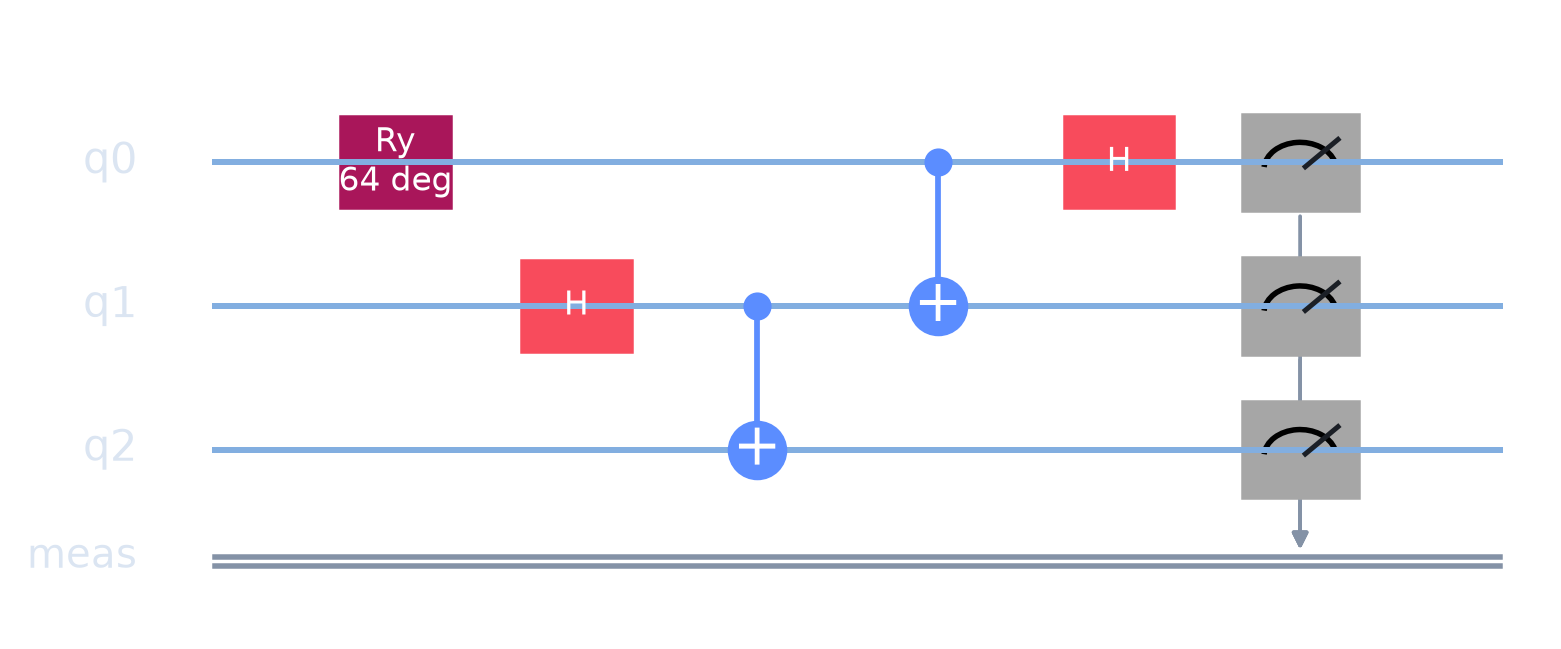
-
Rotation & column
In-game
Sets spawn orientation and entry column.
Circuit
imp-brain-v1— two measured bits mapped to rotation and column.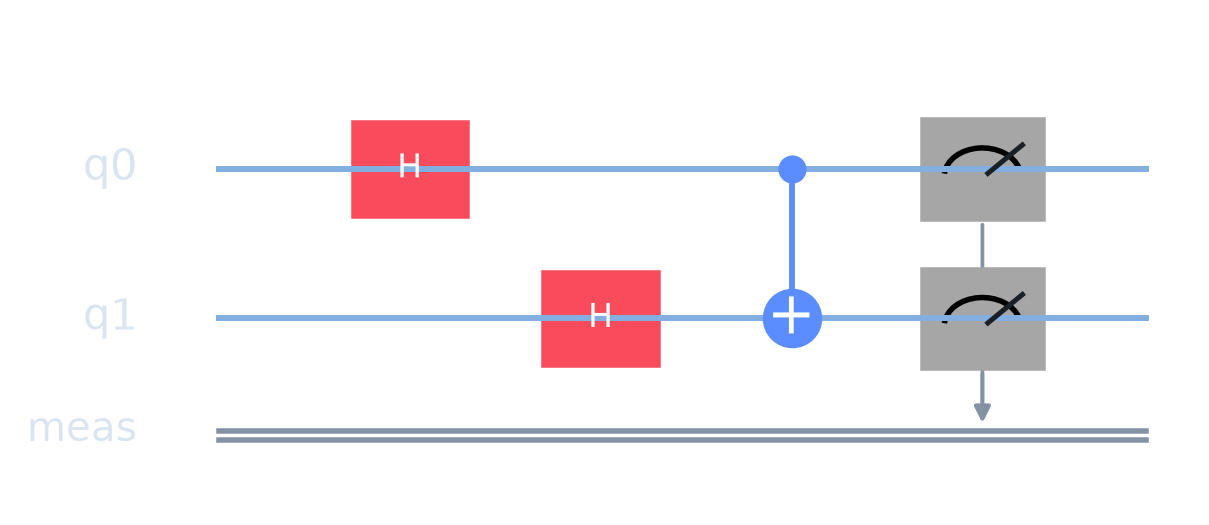
-
Drop cadence
In-game
Interval between grid steps; decreases as level rises.
Circuit
enemy-profile-hunter-v1— drop interval drawn on each new piece.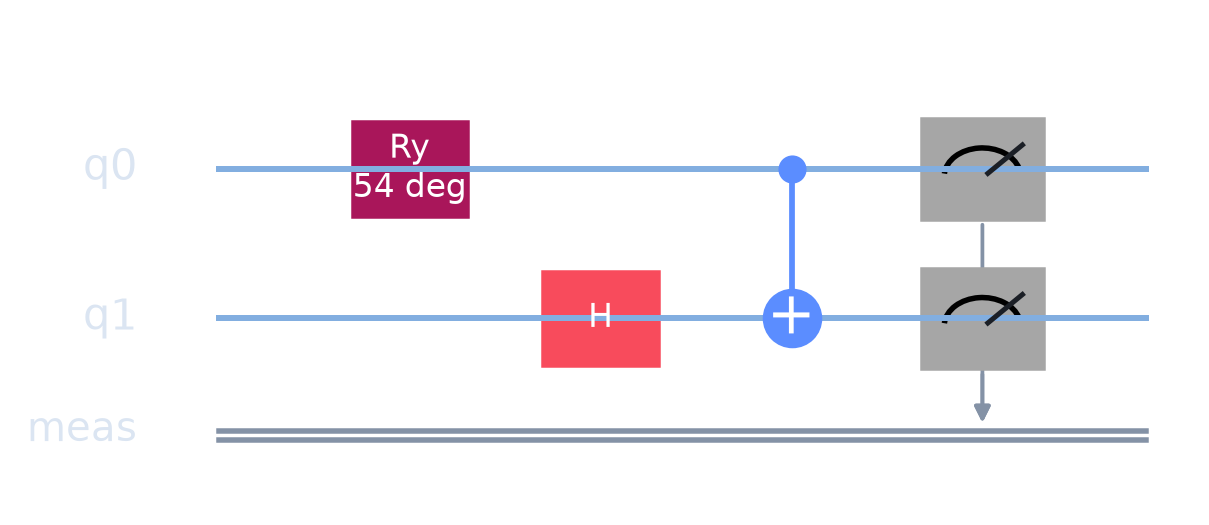
-
Space — hard drop
In-game
Instant lock; score bonus, sometimes one extra line.
Circuit
observation-pulse-v1— deliberate measure, 2 bits → bonus type.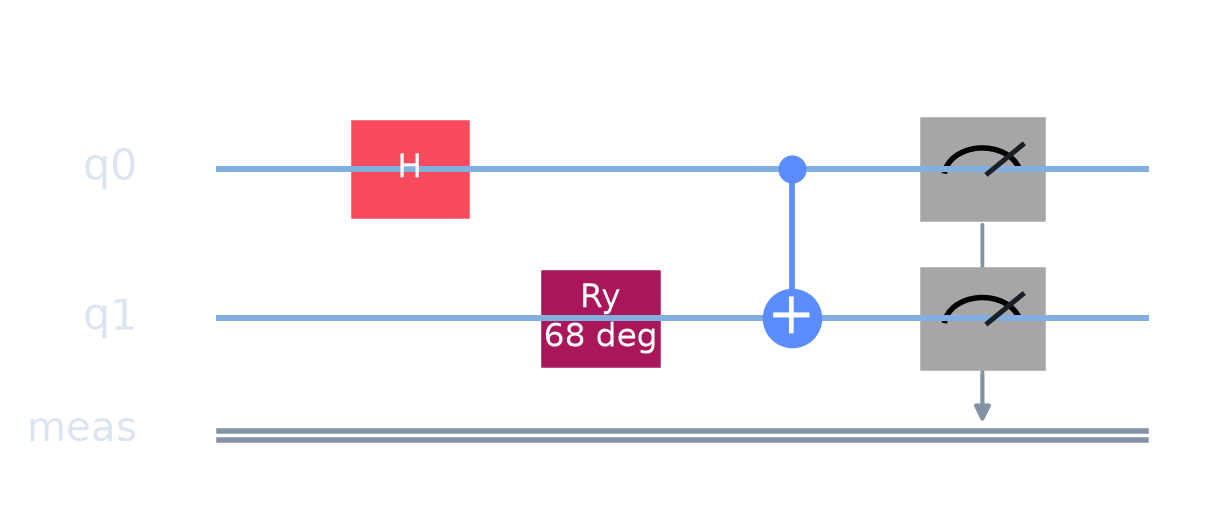
-
Line clear
In-game
Score multiplier ×1 to ×4 from the draw.
Circuit
q-shard-stabilizer-v1— post-clear stabilizer, bits → multiplier.